Article
The public-health case for switching to an EV
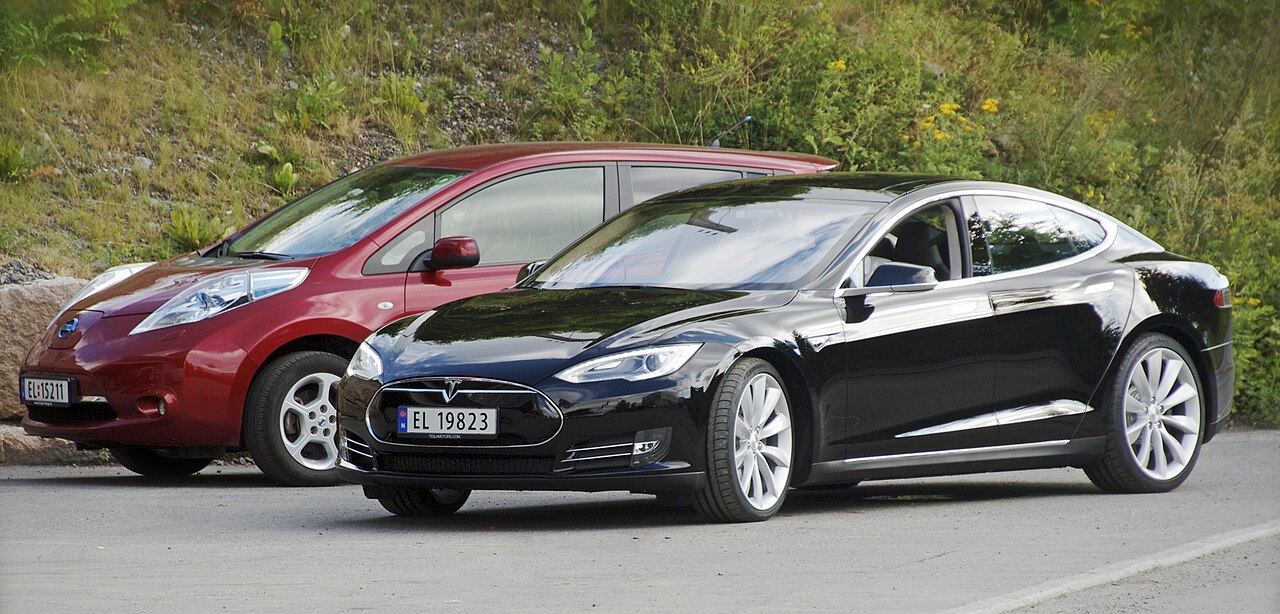

Everything else on this site is deliberately about your money — depreciation, energy, insurance, financing, the lines that actually move your personal cost of ownership. This article is the one honest exception, and we're upfront about why it doesn't belong in a total-cost-of-ownership number: it's about a benefit that accrues to other people, not to you, which is exactly why a spreadsheet built around your own costs will never show it.
What the research actually measures
A 2026 systematic review in Reviews on Environmental Health looked specifically at the air-quality and public-health co-benefits of national transport policies — meaning it treats vehicle-fleet changes not as a climate question alone, but as a public-health intervention with measurable co-benefits, in the same category as smoking bans or clean-water regulation [1]. Earlier systematic review work integrating air-quality and public-health benefits into US decarbonisation strategy reached a related structural conclusion: policies aimed at reducing carbon emissions from transport tend to reduce tailpipe air pollutants at the same time, because the two are often produced by the same combustion process, so a policy justified purely on climate grounds frequently delivers a health benefit as a side effect rather than a coincidence.
Two more targeted studies put numbers on specific places rather than staying general. Research on fleet electrification in China's Yangtze River Delta modelled both carbon mitigation and direct health effects from the same policy shift, treating them as two outputs of one intervention rather than two separate stories [3]. And a study of Seattle, Washington specifically quantified health benefits from cleaner vehicles combined with increased active transportation, which is a useful reminder that vehicle electrification and things like walking and cycling infrastructure aren't competing policy goals — the research treats them as complementary levers toward the same air-quality outcome [4].
Why this doesn't show up in your own cost of ownership
Our what a car really costs framework is deliberately built around costs and benefits that land on the owner: what you pay, what you get back at resale, what a lender charges you. Tailpipe air pollution reduction is a textbook example of what economists call an externality — a cost (in this case avoided) that falls on people other than the person making the purchasing decision. Petrol and diesel vehicle emissions contribute to air pollution at street level, and pollution's health effects are well documented to concentrate near roads and in areas with heavy traffic — which means the person who benefits most from your switch to electric is disproportionately likely to be someone who lives or works near roads you drive on, not you.
That's precisely why a TCO calculation is the wrong tool to capture it. TCO answers "what does this cost me," and this benefit, almost by design, doesn't cost the buyer anything extra to receive — it's a side effect of the same purchase decision that a depreciation or insurance calculation is already modelling for entirely different reasons.
What this does and doesn't mean for your decision
This is not a claim that public health benefits should override the financial numbers this site is built around, and it isn't a claim about any specific health outcome for any specific individual — the research operates at the population level, comparing policies and fleets, not tracking individual drivers or their neighbours. If your own powertrain comparison or country page numbers favour petrol or a hybrid for your situation, that math doesn't change because of this article. What does change is the completeness of the picture: a decision made purely on personal TCO is optimising for one column of a two-column ledger, even if the second column doesn't have your name on it.
Framework: separating the two kinds of benefit
| Type of benefit | Who receives it | Captured by a TCO calculation? | What the research covers |
|---|---|---|---|
| Lower running cost (energy, maintenance) | You, the owner | Yes | Covered throughout this site's cost-line articles |
| Resale value and depreciation | You, the owner (eventually) | Yes | Covered in our depreciation coverage |
| Reduced tailpipe air pollution near roads | People living and working near the roads you drive | No | Air-quality co-benefit research in transport-policy studies |
| Population-level health outcomes from fleet-wide electrification | The broader population, cumulatively, from many owners' decisions | No | Fleet-electrification health-impact studies |
Common questions
Does switching to an EV directly improve my own health? The research reviewed here is about population and air-quality effects, not individual health outcomes for a single driver — it's not a claim that owning an EV changes your personal health.
Should this change which car I buy based on the numbers elsewhere on this site? Not on its own. This is presented as a separate, real benefit that a TCO calculation structurally can't capture, not as a reason to override a TCO conclusion that favours a different powertrain for your situation.
Is the health benefit the same everywhere, regardless of country? No, and we don't have country-specific figures to give here — it plausibly depends on local traffic density, existing air quality, and how a given country's electricity grid is generated, several of which our country pages address for other reasons.
Are these benefits specific to fully electric vehicles, or do hybrids share them? The cited research generally examines fleet electrification and vehicle-emissions reduction broadly rather than isolating battery-electric vehicles specifically from other lower-emission options — see our powertrain pages for how the different options compare on emissions more broadly.
Is this the same as the carbon/emissions case for EVs? Related but distinct. Carbon emissions are a global, cumulative climate effect; the air-quality co-benefits covered here are more local, tied to pollutants that affect the health of people near roads specifically, though the research often studies both together because they share a source.


Related reading
- What a car really costs: reading a total-cost-of-ownership number
- Electric, hybrid, petrol or diesel: what each costs to own
- Depreciation: the largest cost line, and the one nobody looks at
- Why EV insurance is priced differently
References
Every citation below links to the original peer-reviewed record on PubMed or via DOI. Nothing here is a substitute for medical advice.
-
Air quality and public health co-benefits of national transport policies Naw ATH, Papong S, Rattanapan C, et al. · Reviews on environmental health · 2026 · Systematic review DOIPubMed 42137951
-
Integrating Air Quality and Public Health Benefits in U.S. Decarbonization Strategies Gallagher CL, Holloway T · Frontiers in public health · 2020 · Systematic review DOIPubMed 33330312Full text
-
Carbon mitigation and health effects of fleet electrification in China's Yangtze River Delta Zhu Y, Liu Y, Liu X, et al. · Environment international · 2023 · Journal article DOIPubMed 37717521
-
Health benefits from cleaner vehicles and increased active transportation in Seattle, Washington Filigrana P, Levy JI, Gauthier J, et al. · Journal of exposure science & environmental epidemiology · 2022 · Journal article DOIPubMed 35288650Full text
-
Public Preference for Electric Vehicle Incentive Policies in China: A Conjoint Analysis Li W, Long R, Chen H, et al. · International journal of environmental research and public health · 2020 · Journal article DOIPubMed 31906526Full text