Start here
Electric or petrol? It comes down to two questions
Every honest answer to this question starts with "it depends". It depends on two things, both of which you already know about yourself.

The verdict, for every combination
| You drive | You can charge at home | You cannot charge at home |
|---|---|---|
| 10,000 km (6,000 mi) | Petrol — the purchase premium dominates when you barely use the energy saving | Petrol — no cheap charging and few kilometres — the EV case has nothing to work with |
| 20,000 km (12,000 mi) | Battery-electric — the off-peak energy saving now outweighs the purchase premium in most markets | Conventional hybrid — public charging erodes the EV advantage; a hybrid needs no plug at all |
| 30,000 km (18,000 mi) | Battery-electric — energy is a major line and yours is the cheap one | Conventional hybrid — rapid-charging prices at this distance can approach fuel cost |
| 60,000 km (36,000 mi) | Battery-electric — the largest energy saving available to any driver | Diesel — motorway efficiency without a charging dependency — but check city access rules first |
Read one row. That is the answer for you, and the rest of this site is why. Total-cost studies comparing powertrains reach different winners in different markets and at different mileages — that variation is the finding, not a weakness in the research [1], and it is exactly why a single universal answer would be a lie.
Why distance decides it
An electric car costs more to buy and less to run. Every kilometre you drive works off a little of that premium, so the further you drive, the better the EV case gets — and at low mileage there simply are not enough kilometres to repay it. That is the whole mechanism, and it is why the mileage pages exist.
Why charging access decides it
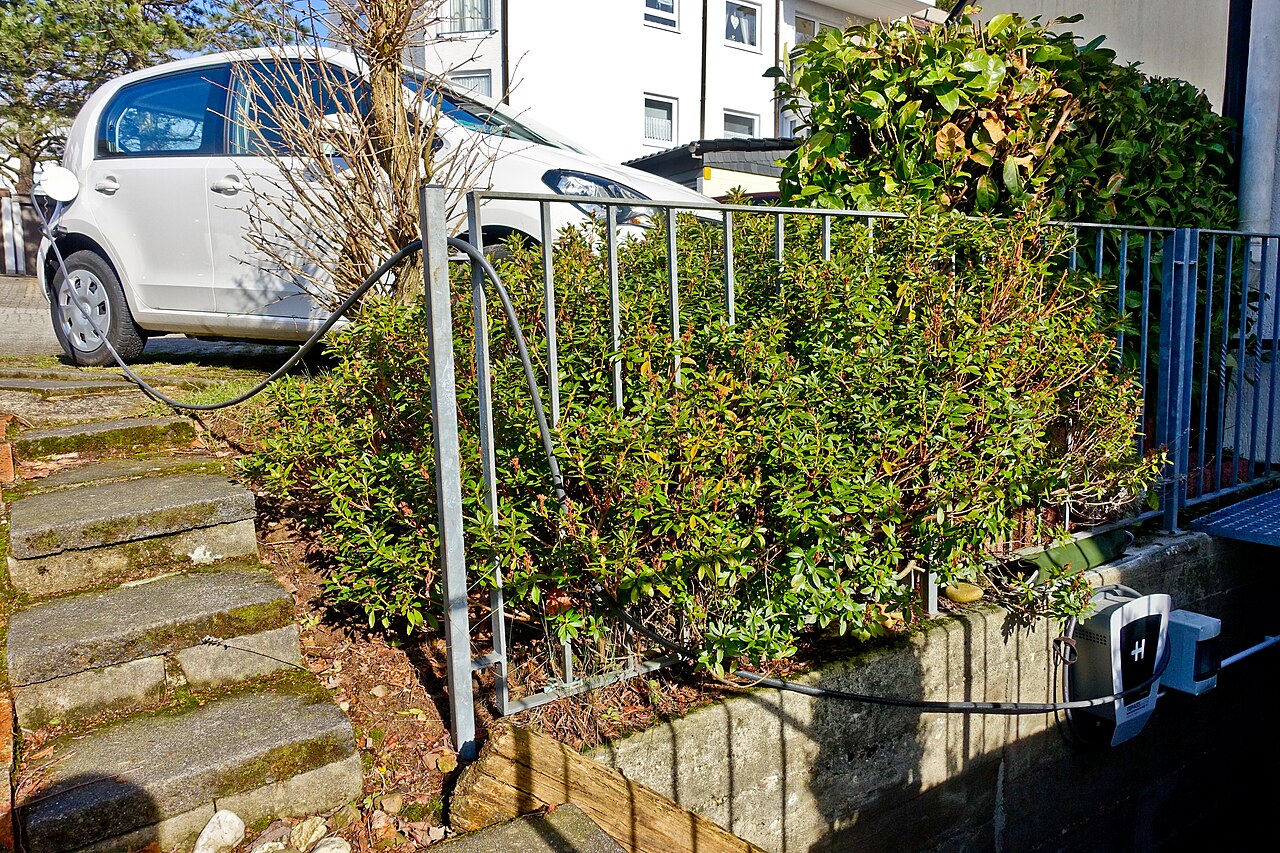
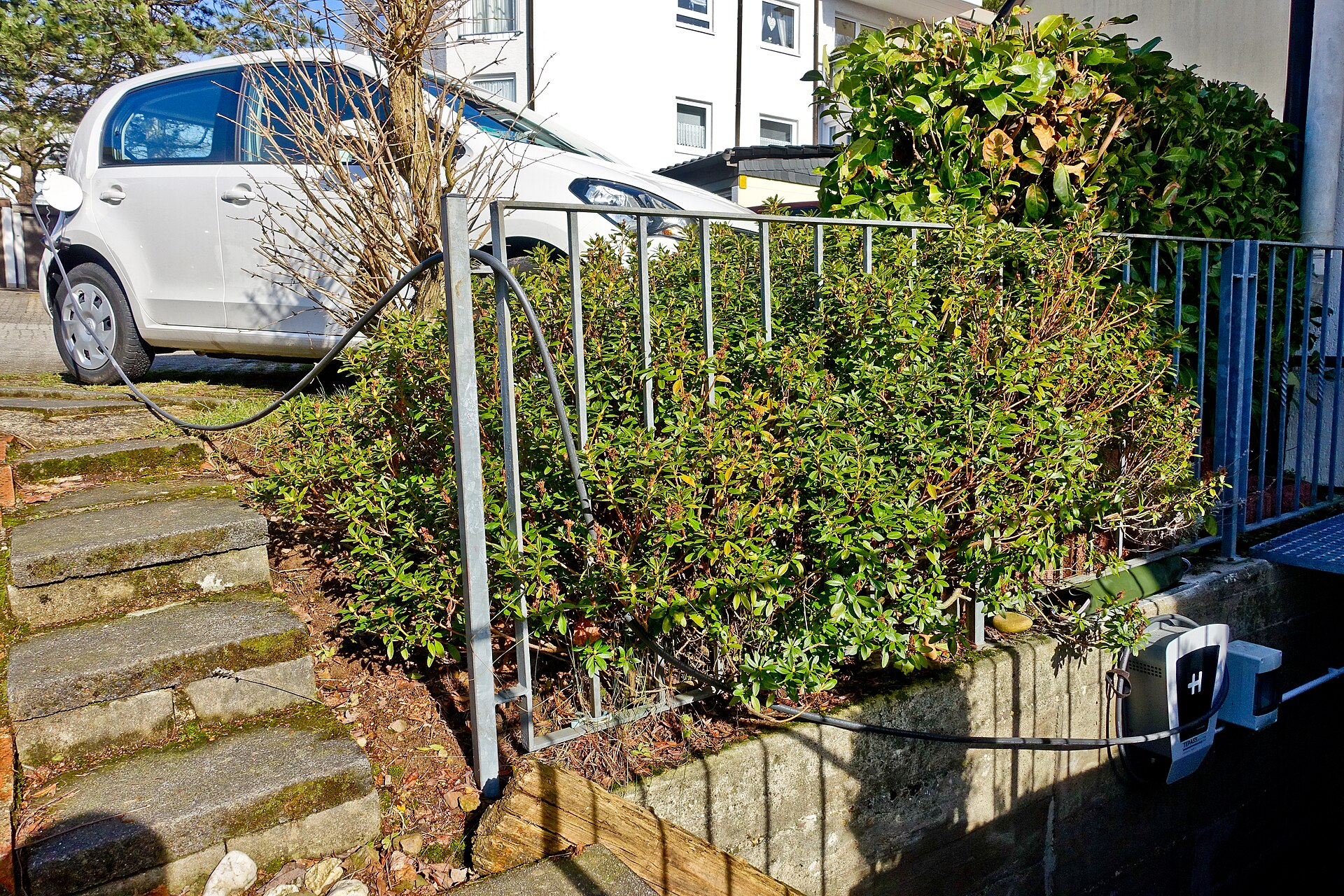
For an EV the energy line is not one price but two. Off-peak home charging is the cheapest fuel available to any driver; motorway rapid charging can approach the cost of petrol. Which of those you live on is set by whether you have somewhere to plug in overnight — see home versus public charging.
What would change the answer
- A workplace charger puts you in the left-hand column even without a driveway.
- A company car. Where benefit-in-kind favours zero-emission cars — the UK, Belgium, the Netherlands — the tax advantage can outweigh everything in this table. Check your country.
- A cold climate. Winter raises EV consumption, mostly through cabin heating; a heat pump narrows it. See what winter really costs.
- Very short trips only. A conventional hybrid is strongest in stop-start urban driving and needs no plug.
- City access restrictions. They are tightening against diesel across Europe, and a car you cannot drive where you need to go is not cheap at any price.
Go deeper
- Battery-electric against petrol, line by line
- Battery-electric against hybrid
- Diesel against petrol
- Plug-in hybrid: the one that depends on you
- All five powertrains compared
What you control after buying
The energy line of any total-cost estimate is the one you control after purchase. Home charging on an off-peak tariff and motorway rapid charging can differ several-fold per kilowatt-hour, so where you charge on long journeys moves the annual number more than the badge does. Drive Charge Eat plans stops around cheaper, reliable chargers that also have somewhere to eat.
Is an electric car cheaper than petrol?
At what mileage does an EV start to win?
What if I cannot charge at home?
Is a plug-in hybrid a good compromise?
References
Every citation below links to the original peer-reviewed record on PubMed or via DOI. Nothing here is a substitute for medical advice.
-
How to Improve the Total Cost of Ownership of Electric Vehicles: An Analysis of the Light Commercial Vehicle Segment Lebeau P, Macharis C, Van Mierlo J · World Electric Vehicle Journal · 2019 · Journal article DOI
-
Total cost of ownership of electric and gasoline used vehicles Woody M, Yin S, Green A, et al. · Environmental Research Letters · 2026 · Journal article DOI
-
Ownership Levies and Electric Vehicle Adoption: A Total Cost of Ownership and Legal Analysis of Ukraine’s Fiscal Reversal Vovk Y, Vovk I, Martsenko N, et al. · World Electric Vehicle Journal · 2026 · Journal article DOI
-
Route-Specific Total Cost of Ownership for Electric Trucks: A Danish Distribution Case Study Iversen L, Rehmeier C · World Electric Vehicle Journal · 2026 · Journal article DOI
-
Dynamic User Equilibrium for Electric Vehicle Departure Time and Path–Charging Choices with Wireless and Fast Charging Services Zhang X, Ren H · World Electric Vehicle Journal · 2026 · Journal article DOI
-
Machine Learning for Plug-in-Time Classification of Charging Faults and Abnormal Termination Events in Public Electric-Vehicle Charging Sessions Thango B, Duan C · World Electric Vehicle Journal · 2026 · Journal article DOI
-
Total Cot of Ownership of Electric Car and Internal Combustion Engine Car With Performance Normalization Santoso A, Priyono B · International Journal of Environmental, Sustainability and Social Science · 2026 · Journal article DOI
-
Optimizing Charging Control for Fast and Efficient Electric Vehicle Charging Han L, Liu H, Zhang Y, et al. · Journal of Autonomous Vehicles and Systems · 2025 · Journal article DOI
-
Research on Battery Electric Vehicles’ DC Fast Charging Noise Emissions: Proposals to Reduce Environmental Noise Caused by Fast Charging Stations Clar-Garcia D, Campello-Vicente H, Fabra-Rodriguez M, et al. · World Electric Vehicle Journal · 2025 · Journal article DOI
-
An Optimal Multi-Zone Fast-Charging System Architecture for MW-Scale EV Charging Sites Althurthi S, Rajashekara K · World Electric Vehicle Journal · 2025 · Journal article DOI
-
Total Cost of Ownership of Electric Buses in Europe Ghotge R, van Rooij D, van Breukelen S · World Electric Vehicle Journal · 2025 · Journal article DOI
-
Techno-Economic Comparison of Total Cost Ownership of Electric and Combustion Light Commercial Vehicles Taborda-Ospina L, Ortiz-Castrillón R, Jaramillo-Duque Á, et al. · Revista de Gestão Social e Ambiental · 2024 · Journal article DOI