Cost lines
Home charging versus public charging: the line you still control
Once the car is bought and the finance is signed, depreciation, insurance and tax are largely out of your hands. Energy is not — and for an EV it is not one line but two.
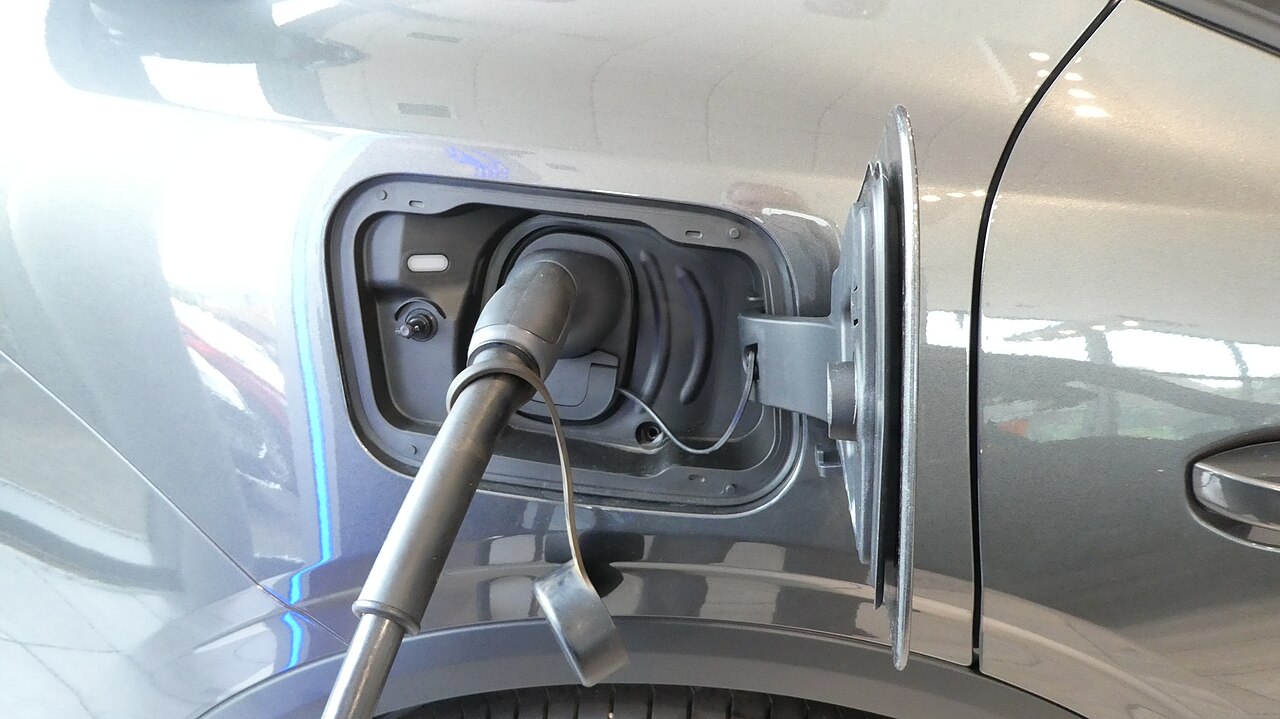

Why the line splits
A combustion car has one fuel price with modest variation. An electric car has at least two: what a kilowatt-hour costs at home on a tariff you chose, and what it costs at a public charger you did not. Charging-strategy research treats those as separate cost regimes with different optimisation logic — schedule the cheap one, minimise the dear one [1][8].
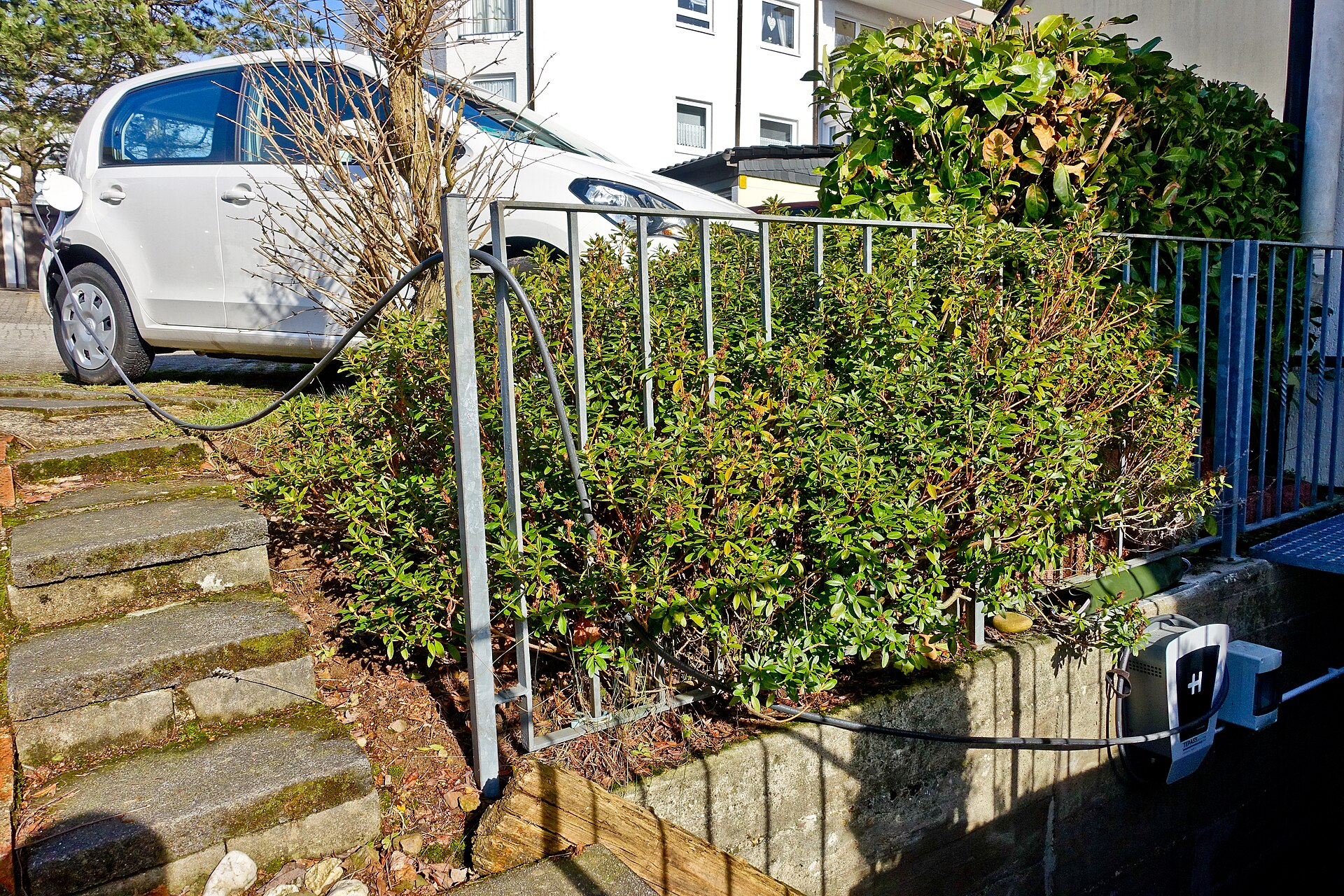

The gap between the two is not a rounding error. Motorway rapid charging on a contactless card can approach petrol-equivalent cost; overnight home charging on an off-peak tariff sits far below it. The same car, the same distance, and a very different second-largest cost line depending on which of those you rely on.
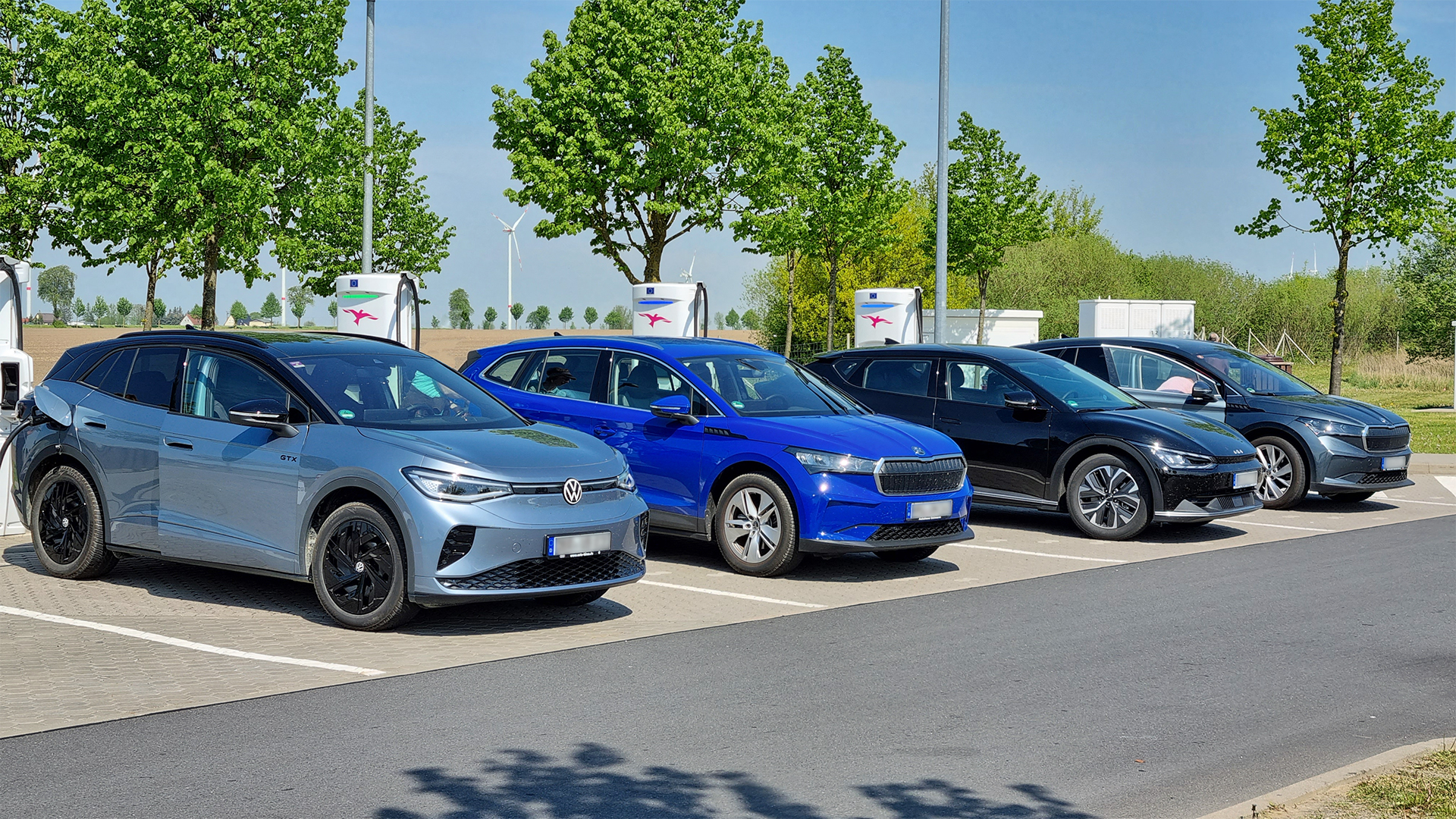

What decides your mix
- Off-street parking. The single largest determinant. With a driveway or garage, most charging can be cheap; without one, the mix tilts toward public pricing and much of the EV energy advantage can disappear.
- Workplace charging, where it exists, is the next-best substitute for a home charger.
- Annual distance and journey shape. Many short trips favour home charging; frequent long motorway days push a larger share onto rapid chargers — see the mileage pages for how that changes the sums.
- Tariff choice. Off-peak and EV-specific tariffs are where the home advantage lives; a flat-rate tariff gives most of it back.
What to do about it
Get a home or workplace charger if you possibly can — that is the whole game for most drivers. Choose an off-peak or EV tariff and schedule charging into it. And on the long days, treat the choice of rapid-charging stop as a cost decision, because it is one: Drive Charge Eat exists to make that choice on the road, around chargers that are cheaper, reliable and next to somewhere decent to eat.
Is charging an EV cheaper than petrol?
Can I run an EV without a home charger?
Does it matter which rapid charger I use?
References
Every citation below links to the original peer-reviewed record on PubMed or via DOI. Nothing here is a substitute for medical advice.
-
How to Improve the Total Cost of Ownership of Electric Vehicles: An Analysis of the Light Commercial Vehicle Segment Lebeau P, Macharis C, Van Mierlo J · World Electric Vehicle Journal · 2019 · Journal article DOI
-
Total cost of ownership of electric and gasoline used vehicles Woody M, Yin S, Green A, et al. · Environmental Research Letters · 2026 · Journal article DOI
-
Ownership Levies and Electric Vehicle Adoption: A Total Cost of Ownership and Legal Analysis of Ukraine’s Fiscal Reversal Vovk Y, Vovk I, Martsenko N, et al. · World Electric Vehicle Journal · 2026 · Journal article DOI
-
Route-Specific Total Cost of Ownership for Electric Trucks: A Danish Distribution Case Study Iversen L, Rehmeier C · World Electric Vehicle Journal · 2026 · Journal article DOI
-
Dynamic User Equilibrium for Electric Vehicle Departure Time and Path–Charging Choices with Wireless and Fast Charging Services Zhang X, Ren H · World Electric Vehicle Journal · 2026 · Journal article DOI
-
Machine Learning for Plug-in-Time Classification of Charging Faults and Abnormal Termination Events in Public Electric-Vehicle Charging Sessions Thango B, Duan C · World Electric Vehicle Journal · 2026 · Journal article DOI
-
Total Cot of Ownership of Electric Car and Internal Combustion Engine Car With Performance Normalization Santoso A, Priyono B · International Journal of Environmental, Sustainability and Social Science · 2026 · Journal article DOI
-
Optimizing Charging Control for Fast and Efficient Electric Vehicle Charging Han L, Liu H, Zhang Y, et al. · Journal of Autonomous Vehicles and Systems · 2025 · Journal article DOI
-
Research on Battery Electric Vehicles’ DC Fast Charging Noise Emissions: Proposals to Reduce Environmental Noise Caused by Fast Charging Stations Clar-Garcia D, Campello-Vicente H, Fabra-Rodriguez M, et al. · World Electric Vehicle Journal · 2025 · Journal article DOI
-
An Optimal Multi-Zone Fast-Charging System Architecture for MW-Scale EV Charging Sites Althurthi S, Rajashekara K · World Electric Vehicle Journal · 2025 · Journal article DOI
-
Total Cost of Ownership of Electric Buses in Europe Ghotge R, van Rooij D, van Breukelen S · World Electric Vehicle Journal · 2025 · Journal article DOI
-
Techno-Economic Comparison of Total Cost Ownership of Electric and Combustion Light Commercial Vehicles Taborda-Ospina L, Ortiz-Castrillón R, Jaramillo-Duque Á, et al. · Revista de Gestão Social e Ambiental · 2024 · Journal article DOI