Powertrain
Battery-electric: what it costs to own
Highest purchase price of the three, cheapest to run per kilometre if you can charge at home, and the powertrain whose total-cost case is most sensitive to how many kilometres you drive and where you plug in.
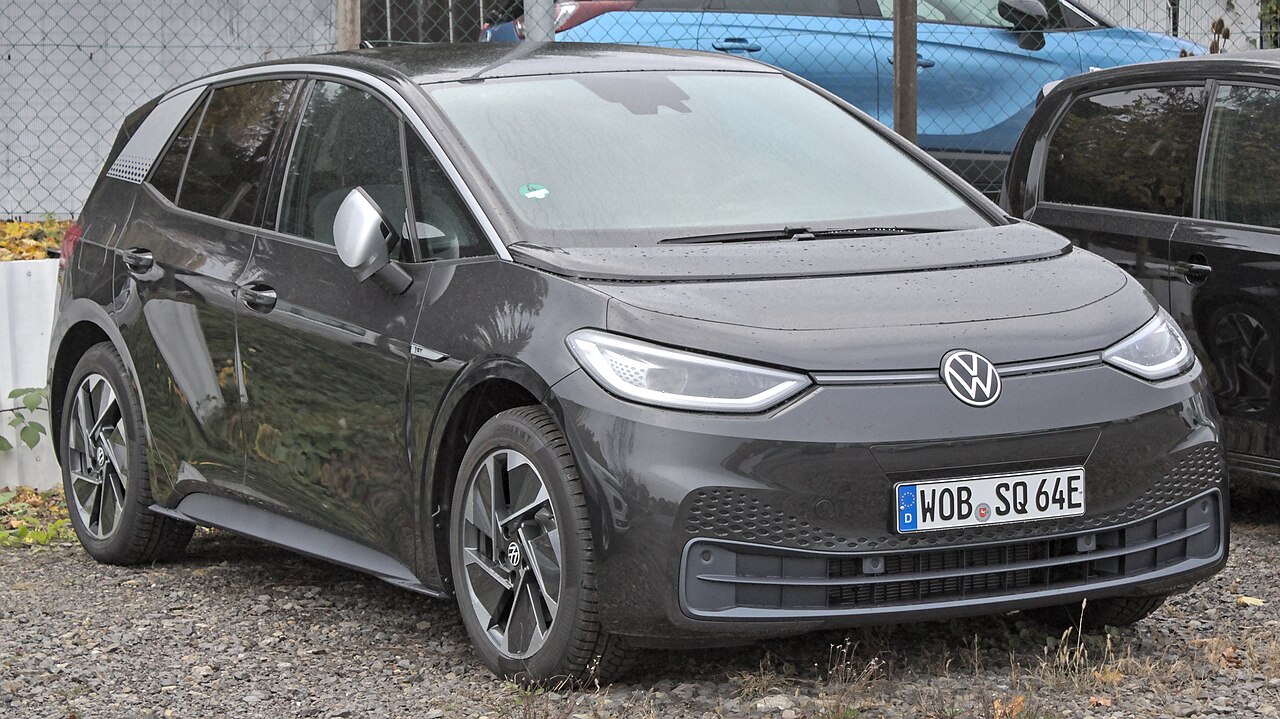

The shape of the cost
Highest purchase price of the three, cheapest to run per kilometre if you can charge at home, and the powertrain whose total-cost case is most sensitive to how many kilometres you drive and where you plug in. Total-cost studies that compare powertrains find the ranking of the cost lines differs between them more than the total does — which is why the shape below matters more than any single number [1].
Line by line
| Line | How it behaves | With more kilometres |
|---|---|---|
| Depreciation | The most volatile residuals of the three: early generations, list-price cuts and fleet waves all hit hard, and battery state of health is becoming a priced attribute. A documented pack holds value; an undocumented one inherits the segment’s worst assumptions. | falls |
| Energy | Splits into two lines — off-peak home charging and public rapid charging — at very different unit costs. With a driveway, by far the cheapest per kilometre; without one, much of the advantage can go. Winter raises consumption, mostly through cabin heating. | rises |
| Maintenance | Fewer moving parts, no oil, less brake wear from regeneration: routinely the cheapest to maintain. Tyres wear faster under the weight and torque, which is the one line that goes the other way. | holds |
| Insurance | Has run higher than combustion for comparable cars in several markets — repair-network scarcity, battery-replacement risk and higher purchase price all feed premiums — and is narrowing as the fleet ages and repairers catch up. | holds |
| Tax | Where registration or company-car tax is emissions-weighted, the structural winner by construction. Where EV-specific road fees have been introduced (Iceland, some US states), the advantage is smaller than the headline suggests. | holds |
When it wins, when it loses
Wins on total cost most clearly for a driver with home charging doing typical-to-high mileage in a market whose tax system rewards low emissions. Loses most clearly for a low-mileage driver without off-street parking.
What you control after buying
The energy line of any total-cost estimate is the one you control after purchase. Home charging on an off-peak tariff and motorway rapid charging can differ several-fold per kilowatt-hour, so where you charge on long journeys moves the annual number more than the badge does. Drive Charge Eat plans stops around cheaper, reliable chargers that also have somewhere to eat.
Head to head
- Battery-electric against plug-in hybrid
- Battery-electric against conventional hybrid
- Battery-electric against petrol
- Battery-electric against diesel

Battery-electric at each annual distance
- 10,000 km a year — Short commutes or a second car; the car spends most of its life parked.
- 20,000 km a year — The European and US average: a daily commute plus regular longer trips.
- 30,000 km a year — Long commutes, sales territory, frequent motorway journeys.
- 60,000 km a year — Professional driving, cross-country work, the car as a place of business.
Is a battery-electric car cheap to run?
Does a battery-electric car hold its value?
Who should buy a battery-electric car?
References
Every citation below links to the original peer-reviewed record on PubMed or via DOI. Nothing here is a substitute for medical advice.
-
How to Improve the Total Cost of Ownership of Electric Vehicles: An Analysis of the Light Commercial Vehicle Segment Lebeau P, Macharis C, Van Mierlo J · World Electric Vehicle Journal · 2019 · Journal article DOI
-
Total cost of ownership of electric and gasoline used vehicles Woody M, Yin S, Green A, et al. · Environmental Research Letters · 2026 · Journal article DOI
-
What Holds Its Value Price Determinants in Indias Used Motorcycle Market and the Absence of the Yamaha RX100 Bhavnagri P · International Journal for Research in Applied Science and Engineering Technology · 2026 · Journal article DOI
-
Fair Market Value of Used Capacity Assets: Forecasts for Repurposed Electric Vehicle Batteries Bach A, Onori S, Reichelstein S, et al. · The Accounting Review · 2026 · Journal article DOI
-
Ownership Levies and Electric Vehicle Adoption: A Total Cost of Ownership and Legal Analysis of Ukraine’s Fiscal Reversal Vovk Y, Vovk I, Martsenko N, et al. · World Electric Vehicle Journal · 2026 · Journal article DOI
-
Route-Specific Total Cost of Ownership for Electric Trucks: A Danish Distribution Case Study Iversen L, Rehmeier C · World Electric Vehicle Journal · 2026 · Journal article DOI
-
Dynamic User Equilibrium for Electric Vehicle Departure Time and Path–Charging Choices with Wireless and Fast Charging Services Zhang X, Ren H · World Electric Vehicle Journal · 2026 · Journal article DOI
-
Machine Learning for Plug-in-Time Classification of Charging Faults and Abnormal Termination Events in Public Electric-Vehicle Charging Sessions Thango B, Duan C · World Electric Vehicle Journal · 2026 · Journal article DOI
-
Total Cot of Ownership of Electric Car and Internal Combustion Engine Car With Performance Normalization Santoso A, Priyono B · International Journal of Environmental, Sustainability and Social Science · 2026 · Journal article DOI
-
Depreciation Patterns in the UAE Used Car Market: Evidence from Dubizzle Listings Miranda A, Alavi A, Gella M · Journal of Business Insight and Innovation · 2026 · Journal article DOI
-
The impact of intra-European used-car trade on electric vehicle market diffusion and greenhouse gas emissions Frank F, Disch F, Gnann T · eceee Summer Study proceedings · 2026 · Journal article DOI
-
Residual Value Patterns and Price Dispersion in Cambodia’s Used-Car Finance Market Pak J · American Journal of Student Research · 2026 · Journal article DOI