Head to head
Battery-electric or plug-in hybrid: which costs less to own?
Line by line, BEV and PHEV differ on 4 of six cost lines. Those 4 are the decision.
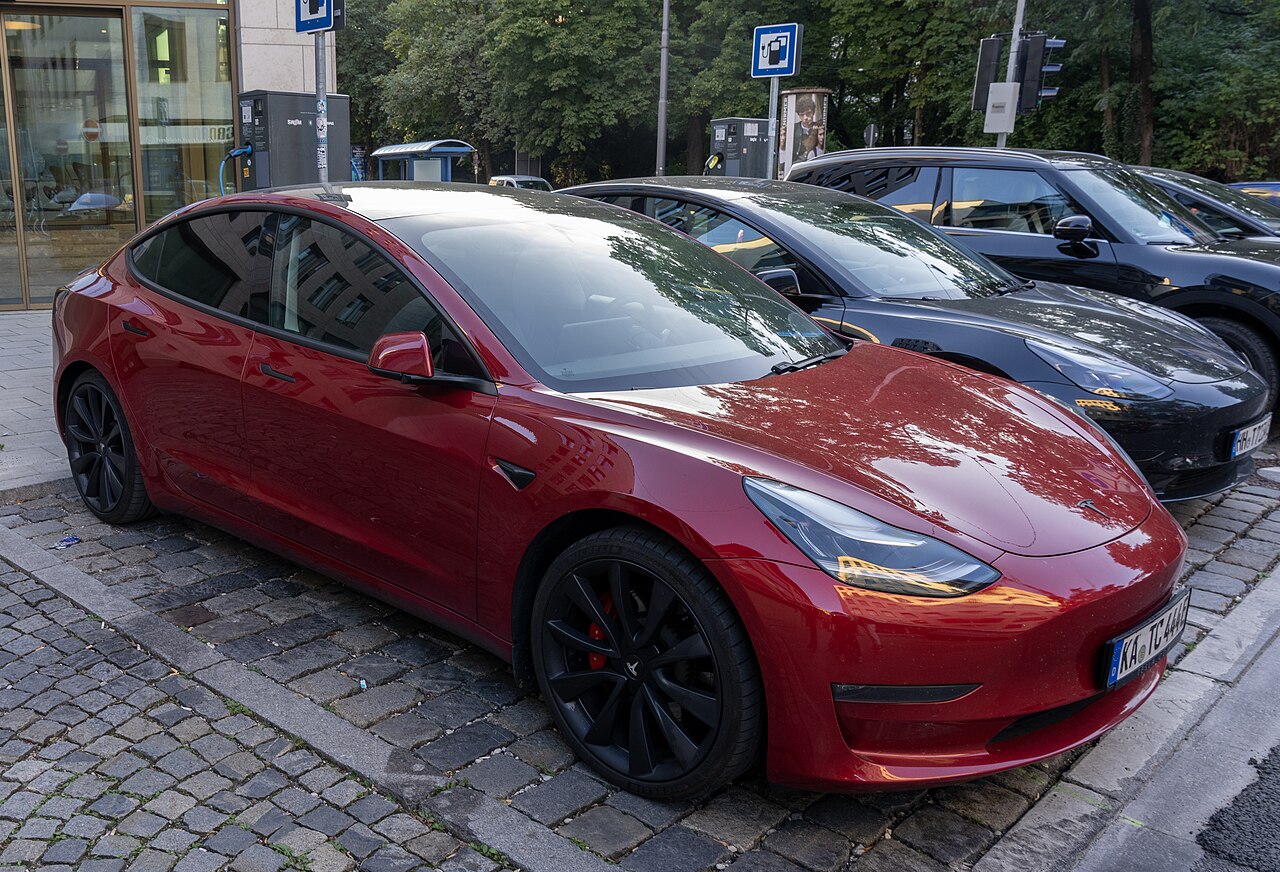

Line by line
Powertrain comparisons in the total-cost literature reach different winners in different markets and at different mileages, and that is the finding rather than a failure of the studies: the answer genuinely depends on the inputs [1]. The lines below are where these two part company.
| Line | Battery-electric | Plug-in hybrid |
|---|---|---|
| Depreciation | The most volatile residuals of the three: early generations, list-price cuts and fleet waves all hit hard, and battery state of health is becoming a priced attribute. A documented pack holds value; an undocumented one inherits the segment’s worst assumptions. | Mid-table, with a specific risk: as company-car and registration-tax regimes withdraw PHEV privileges — several European markets have tightened them — the used-market appeal of the category shifts with the rules. |
| Energy / fuel | Splits into two lines — off-peak home charging and public rapid charging — at very different unit costs. With a driveway, by far the cheapest per kilometre; without one, much of the advantage can go. Winter raises consumption, mostly through cabin heating. | On electric miles it behaves like a small BEV; past the battery range it is a petrol car carrying a battery. Real-world studies find fleet and company PHEVs are often charged far less than assumed, so their real fuel consumption sits well above the official figure. |
| Maintenance | Fewer moving parts, no oil, less brake wear from regeneration: routinely the cheapest to maintain. Tyres wear faster under the weight and torque, which is the one line that goes the other way. | Two systems to service. Generally not cheaper than either a pure combustion or a pure electric car. |
| Tax & fees | Where registration or company-car tax is emissions-weighted, the structural winner by construction. Where EV-specific road fees have been introduced (Iceland, some US states), the advantage is smaller than the headline suggests. | Historically favoured, increasingly qualified: several markets now require a minimum electric range or have removed PHEV benefits altogether. The most rule-sensitive powertrain of the three. |
On insurance, financing cost the two behave much alike, and those lines will not decide it.
What decides it
For BEV: Wins on total cost most clearly for a driver with home charging doing typical-to-high mileage in a market whose tax system rewards low emissions. Loses most clearly for a low-mileage driver without off-street parking.
For PHEV: Makes sense for a driver with home charging whose daily distance sits inside the electric range and who takes occasional long trips — and who will actually plug it in. Makes little sense as a tax-driven company car that is never charged.
The comparison shifts with annual distance — see Battery-electric at each mileage and Plug-in hybrid at each mileage — and with the tax architecture of your market, described on the country pages.


What you control after buying
The energy line of any total-cost estimate is the one you control after purchase. Home charging on an off-peak tariff and motorway rapid charging can differ several-fold per kilowatt-hour, so where you charge on long journeys moves the annual number more than the badge does. Drive Charge Eat plans stops around cheaper, reliable chargers that also have somewhere to eat.
Is BEV or PHEV cheaper to own?
Which holds value better, BEV or PHEV?
References
Every citation below links to the original peer-reviewed record on PubMed or via DOI. Nothing here is a substitute for medical advice.
-
How to Improve the Total Cost of Ownership of Electric Vehicles: An Analysis of the Light Commercial Vehicle Segment Lebeau P, Macharis C, Van Mierlo J · World Electric Vehicle Journal · 2019 · Journal article DOI
-
Total cost of ownership of electric and gasoline used vehicles Woody M, Yin S, Green A, et al. · Environmental Research Letters · 2026 · Journal article DOI
-
Ownership Levies and Electric Vehicle Adoption: A Total Cost of Ownership and Legal Analysis of Ukraine’s Fiscal Reversal Vovk Y, Vovk I, Martsenko N, et al. · World Electric Vehicle Journal · 2026 · Journal article DOI
-
Route-Specific Total Cost of Ownership for Electric Trucks: A Danish Distribution Case Study Iversen L, Rehmeier C · World Electric Vehicle Journal · 2026 · Journal article DOI
-
Dynamic User Equilibrium for Electric Vehicle Departure Time and Path–Charging Choices with Wireless and Fast Charging Services Zhang X, Ren H · World Electric Vehicle Journal · 2026 · Journal article DOI
-
Machine Learning for Plug-in-Time Classification of Charging Faults and Abnormal Termination Events in Public Electric-Vehicle Charging Sessions Thango B, Duan C · World Electric Vehicle Journal · 2026 · Journal article DOI
-
Total Cot of Ownership of Electric Car and Internal Combustion Engine Car With Performance Normalization Santoso A, Priyono B · International Journal of Environmental, Sustainability and Social Science · 2026 · Journal article DOI
-
Optimizing Charging Control for Fast and Efficient Electric Vehicle Charging Han L, Liu H, Zhang Y, et al. · Journal of Autonomous Vehicles and Systems · 2025 · Journal article DOI
-
Research on Battery Electric Vehicles’ DC Fast Charging Noise Emissions: Proposals to Reduce Environmental Noise Caused by Fast Charging Stations Clar-Garcia D, Campello-Vicente H, Fabra-Rodriguez M, et al. · World Electric Vehicle Journal · 2025 · Journal article DOI
-
An Optimal Multi-Zone Fast-Charging System Architecture for MW-Scale EV Charging Sites Althurthi S, Rajashekara K · World Electric Vehicle Journal · 2025 · Journal article DOI
-
Total Cost of Ownership of Electric Buses in Europe Ghotge R, van Rooij D, van Breukelen S · World Electric Vehicle Journal · 2025 · Journal article DOI
-
Techno-Economic Comparison of Total Cost Ownership of Electric and Combustion Light Commercial Vehicles Taborda-Ospina L, Ortiz-Castrillón R, Jaramillo-Duque Á, et al. · Revista de Gestão Social e Ambiental · 2024 · Journal article DOI